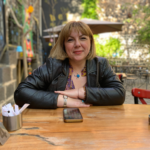
Urfa is a city in southeastern Türkiye where faith, feudalism, and tradition remain deeply intertwined. For many women born there, life arrives with its limits already drawn, by a past that continues to shape the present. This is especially true for the thousands of “invisible” women who leave home before dawn each day, in the biting darkness of the early morning, to work in the textile factory—unseen, unheard. But some women have refused this role assigned to them. Funda Bakış is one of them.
The anatomy of a “factory girl”
The phrase “factory girl” echoes through the streets of Urfa, often used as an insult, a derogatory label that refers to women pushed to the bottom of the social hierarchy, those whose “honor” is questioned because they work late hours, who are treated as cheap, disposable labor.
Funda carried that label for years. She first worked in agriculture under the scorching sun, laboring on land that belonged to others. Later, she became a shop assistant, observing a world she could not access from behind store windows. Eventually, she found work at Özak Textile, one of the region’s major factories.
But Özak was more than a workplace—it was a site of exploitation. Women workers faced constant pressure, harassment, and intimidation, and the yellow union, a labor organization designed to serve the employer’s interests, naturally aligned with the company and worked alongside management rather than workers. For Funda, what began as a job to put bread on the table gradually became something else and brought about her political awakening. She stopped being another set of hands sewing fabric and transformed herself into a voice of protest.
The Özak resistance: An 80-day school
The Özak Textile resistance shook Urfa’s conservative order. In late 2023, hundreds of workers went on strike, risking dismissal to demand the right to choose their own union. And Funda was at the very forefront of that struggle.
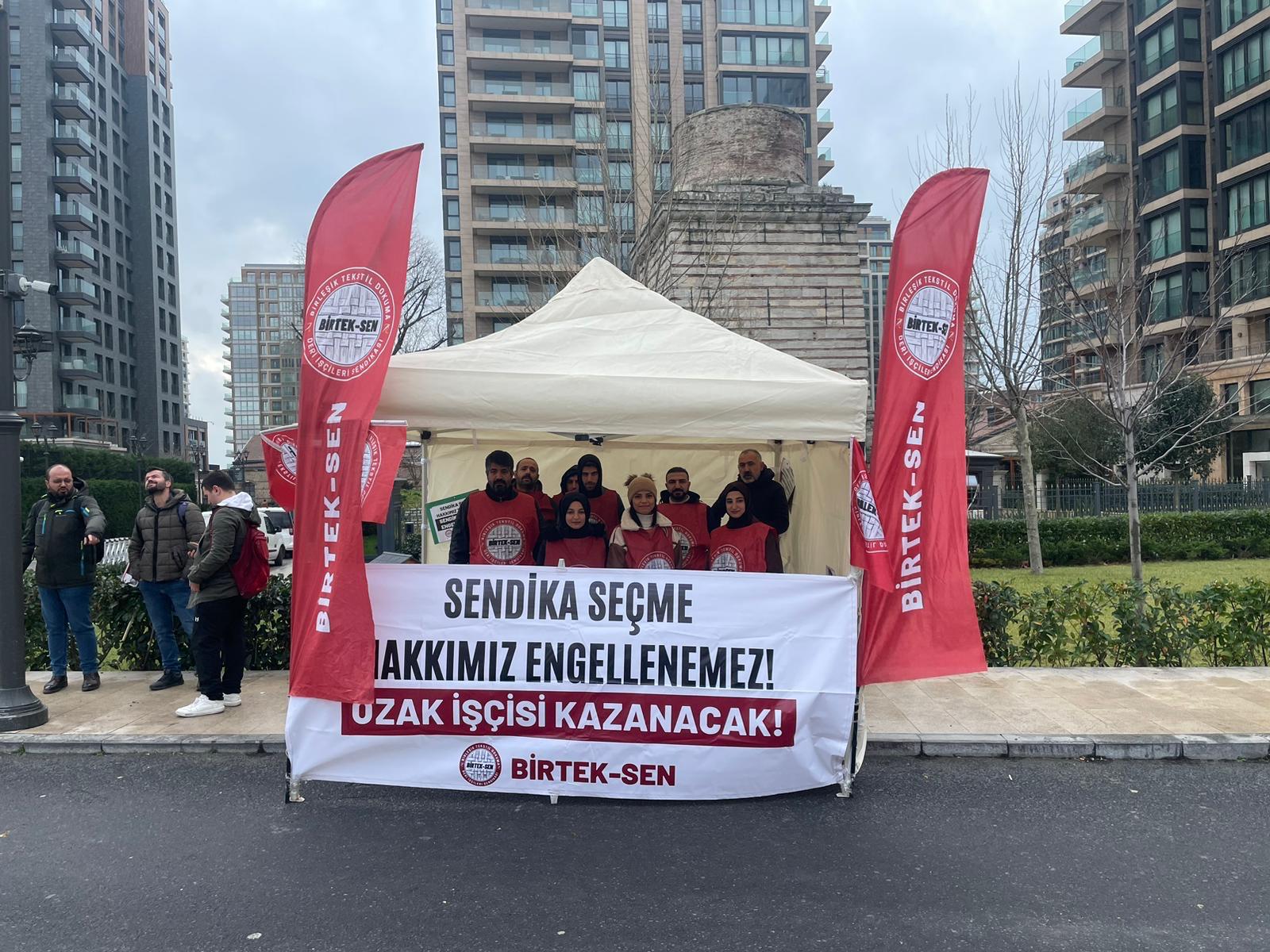
For 80 days, workers faced tear gas, detention, and police repression. Those months transformed Funda both politically and personally: she learned how to defend her rights, how to confront employers and state authorities. She understood that “honor” is not just an abstract concept, and that collective struggle could break through fear. “Today, if I go to a government office, I know how to speak up when I’m right,” she says.
The resistance didn’t just change Funda, but many of her coworkers joined in the movement as well. Management’s threats of “there are plenty of other workers, leave if you want” no longer carried the same power once the women workers had recognized their collective strength.
She understood that “honor” is not just an abstract concept, and that collective struggle could break through fear.
The struggle for existence goes beyond the factory—into the home
But Funda’s struggle did not end at the factory gates. At home, she faced another battle. Having grown up in a conservative, religious family loyal to the ruling party, it was difficult for her family to accept that she was participating in a strike. And when she also got involved in politics, tensions became even sharper.
Funda was offered a mayoral candidacy by the Labor Party (Emek Partisi, EMEP) during the Özak resistance, to which her family reacted harshly—“Fine, you fought, you joined in the struggle. But look at your friends. They got their severance pay and found jobs. What’s left for you? Why politics?”
At that moment, Sevda Karaca, the EMEP MP for Gaziantep, intervened, in a crucial show of feminist solidarity. She had supported the workers throughout the resistance and visited Funda’s family home to speak directly with her mother. Seeing the strength of the movement behind Funda, the family stepped back.
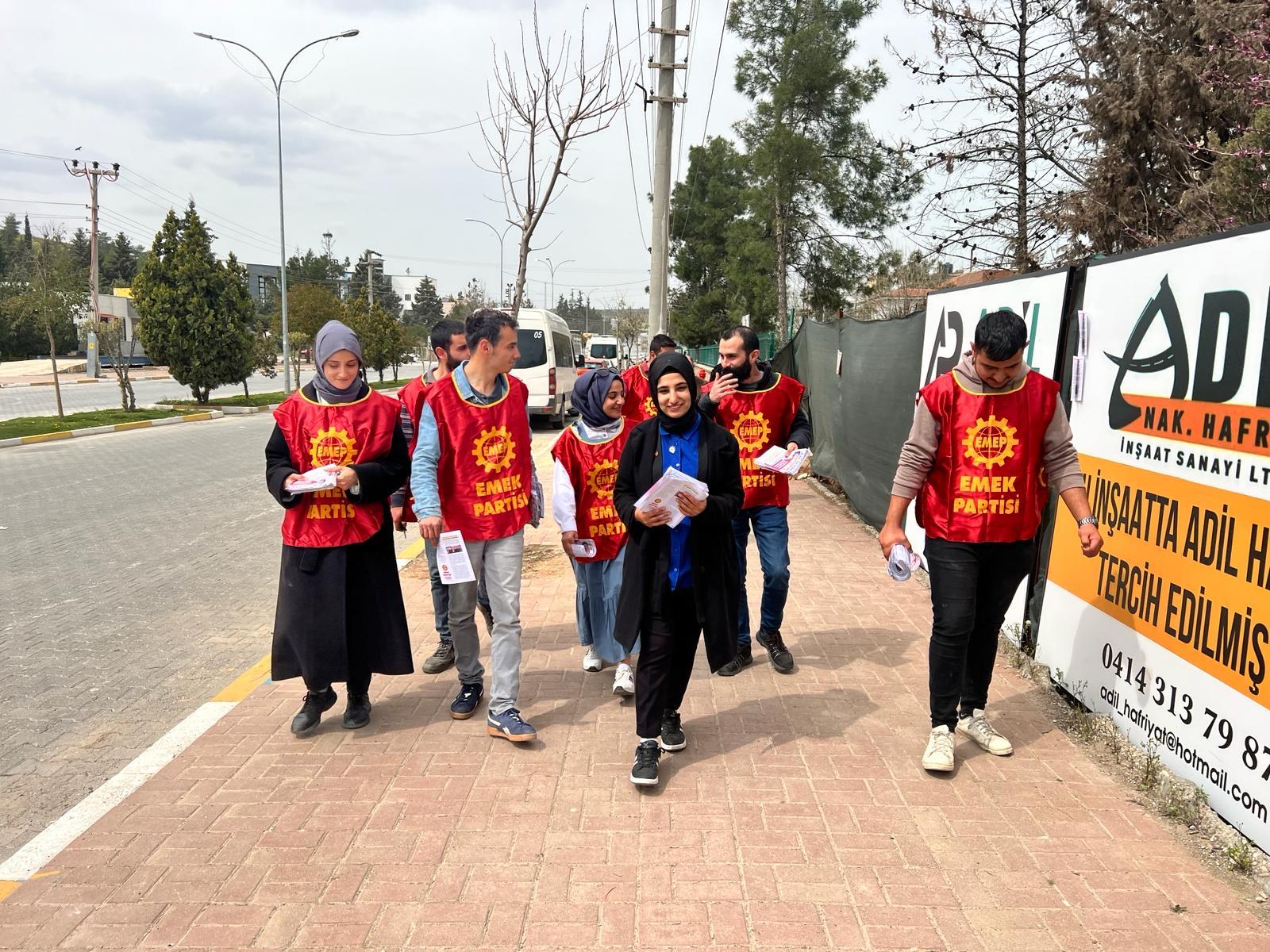
During the election campaign, Funda stood far outside the norms of Urfa’s feudal political structure. She had no wealth, no tribal networks, no entourage. She visited workers’ homes, drank tea with their families, and shared the realities of poverty they all knew.
After the election, her mother, a religious woman who cannot read nor write, proudly told relatives that her daughter’s “goal was to introduce the workers’ party to this region, and she succeeded.” This sentence represented the greatest revolution in Funda’s life.
Alone in the union: The harassment of the patriarchal world
After the election, Funda became the Urfa representative of independent textile union BİRTEK-SEN. In a city life Urfa, a woman serving as a union representative—and leading male workers—directly challenges patriarchal norms, touching every nerve ending of the system.
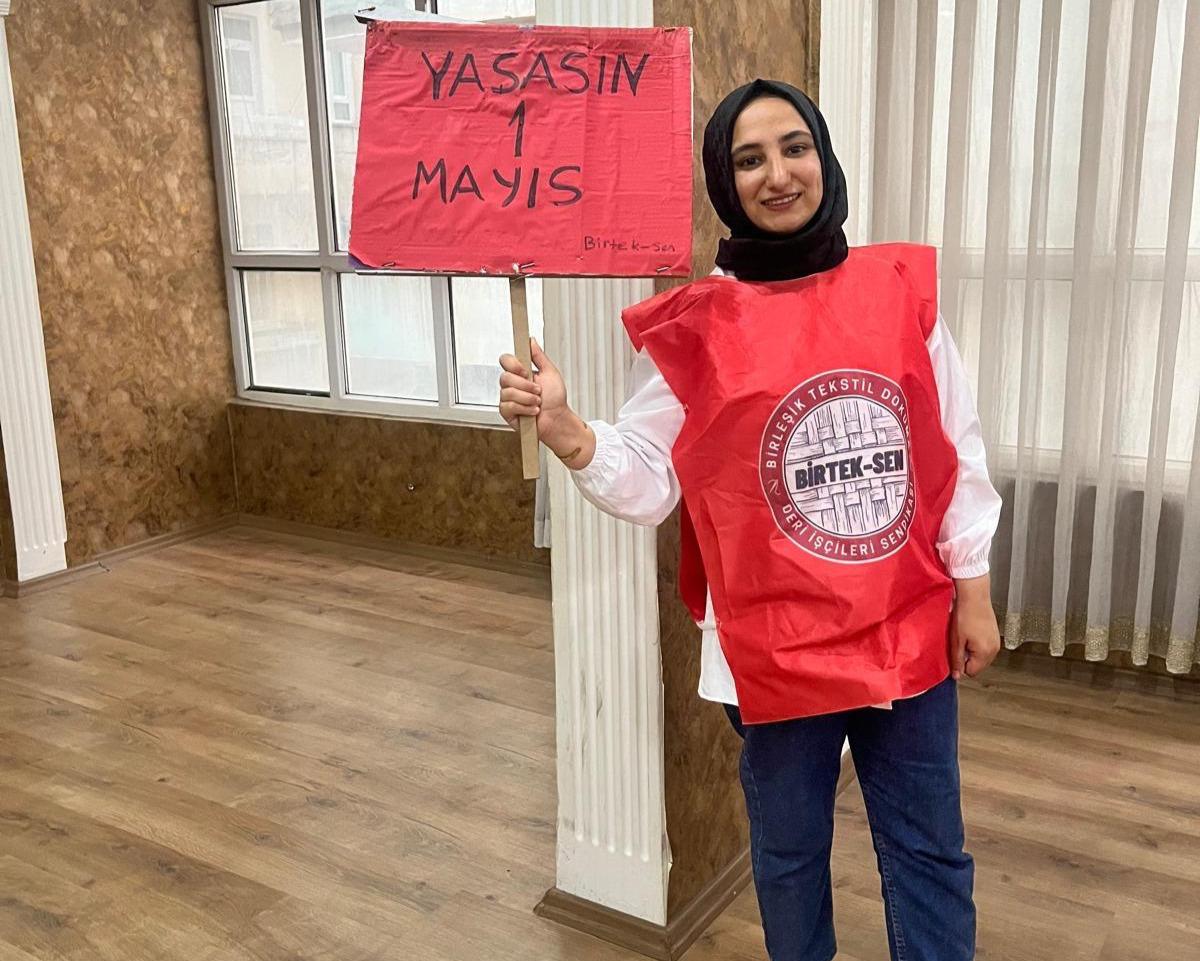
Funda speaks openly about the bitter truth of the struggle she faces: beyond being a class war, it is also a gendered war, one in which gendered violence is perpetrated. A woman alone in a union, against a patriarchal world that only sees her as a target, subjected her to late-night video calls, persistent harassment, and the assumption that independence means availability. “When they realize I’m alone, they feel entitled to dominate me,” she says.
To protect herself, Funda has developed strategies that reveal both the emotional burden and the daily calculations women must make to survive in male-dominated spaces. When speaking to male workers, she often immediately asks about their wives and children, establishing distance and reframing the interaction within family boundaries.
When harassment escalates, male comrades in the union sometimes intervene. But the emotional exhaustion remains, proof of the arduous conditions under which she operates. Class struggle alone does not erase patriarchy. Women in labor movements often fight exploitation and sexism at the same time.
Beyond being a class war, it is also a gendered war, one in which gendered violence is perpetrated. A woman alone in a union, against a patriarchal world that only sees her as a target.
Continuing the fight despite difficult conditions
Despite becoming a union representative and political figure, Funda still lives in cramped conditions: in a crowded family home shared with relatives—brothers, sisters-in-law, and nephews—she has no room or desk of her own. She handles union correspondence in corners of the house and organizes from a union office that lacks basic resources.
But every day, despite this deprivation, despite Urfa’s rigid customs, she opens the door of that union building and walks inside. Because she knows that if she doesn’t open that door, another woman facing harassment at work may have nowhere to turn. If she doesn’t open that door, another worker condemned to surviving on wages below the minimum may remain unheard.