About us
  • it VO
  • fr Français
  • en English
  • ar العربية
No Result
View All Result
Medfeminiswiya - Mediterranean feminist media
  • On the move
  • In-depth
  • Files
  • Artistic Creations
  • Interviews
  • Opinions
  • World
Medfeminiswiya - Mediterranean feminist media
  • On the move
  • In-depth
  • Files
  • Artistic Creations
  • Interviews
  • Opinions
  • World
No Result
View All Result
Medfeminiswiya - Mediterranean feminist media
Home On the move

Making a living at home: How Syrian women are building economies of survival

Luna Al-Rashedby Luna Al-Rashed
5 June 2026
Making a living at home: How Syrian women are building economies of survival

Amid Syria’s deepening economic crisis, the home-based economy has emerged as one of the strategies women rely on to survive. Traditional skills like cooking, crocheting, and confectionery-making have been transformed into primary sources of income. But while this shift speaks to women’s resilience and creativity, it also raises serious questions about the limits of empowerment, the conditions under which it occurs, and its sustainability outside the informal economy.

This post is also available in: Français (French) العربية (Arabic)

“I work for the General Organisation of Tobacco on a contract basis, but my contract wasn’t renewed at the beginning of this year. Which means I lost my family’s main source of income, seeing as my husband had already retired,” says Umm Alaa, a woman living in the al-Barda area of southern rural Damascus.

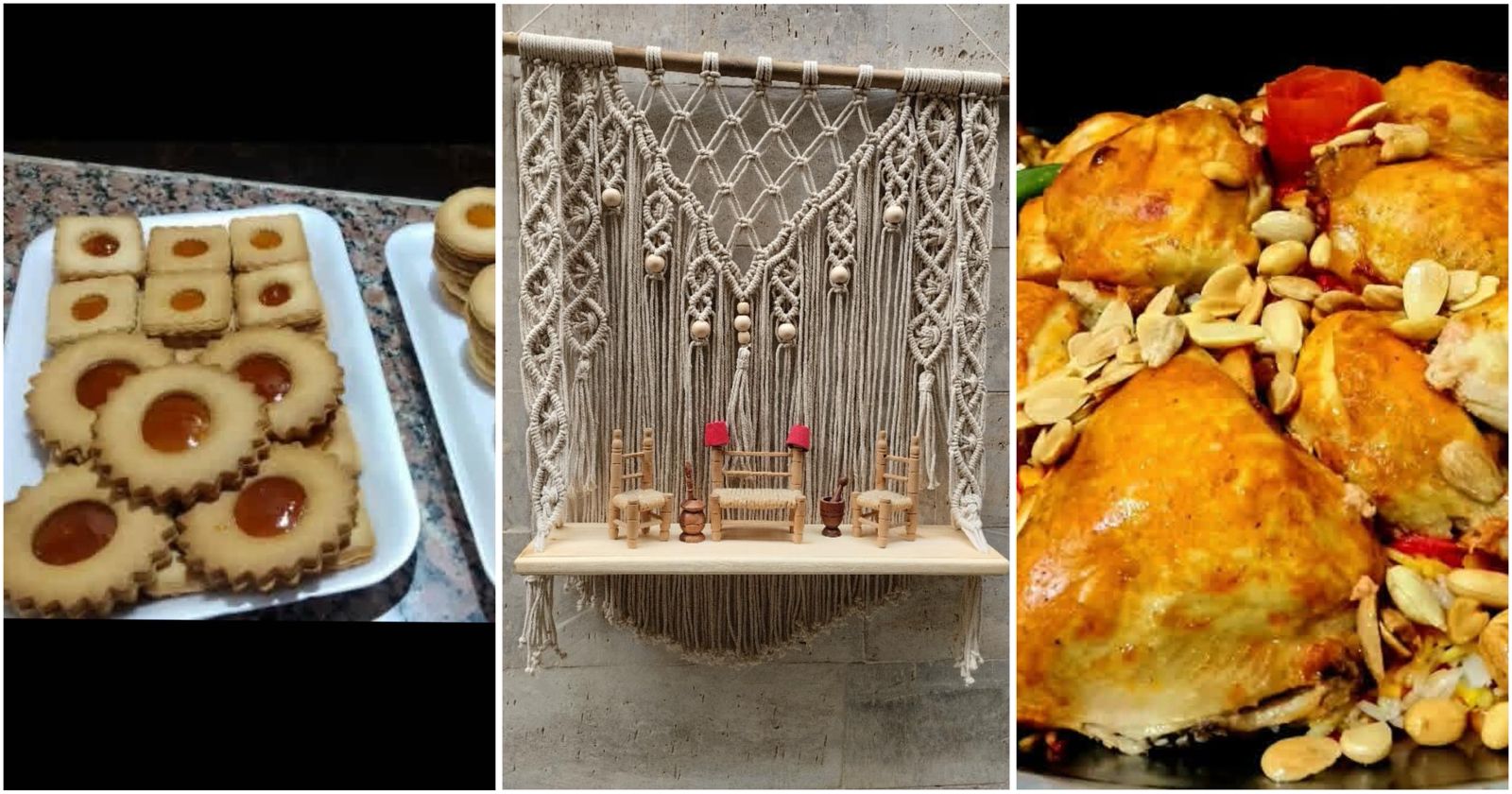
Faced with difficult economic conditions, Umm Alaa decided to start making sweets, a craft she excels at. She began offering her products to local confectionery shops, selling them as homemade goods. It was challenging at first, especially since sweets are considered a luxury in working-class neighborhoods. So she turned to making dairy products and cheeses, which are in greater demand.

“The income is nowhere near proportional to the effort that goes into the work,” Umm Alaa continues. “I do most of the work on my own. I don’t accept help from my husband because men aren’t skilled at this kind of work.” This makes her work take much longer. But, she concludes, “We’re surviving, by the grace of God. Others can’t even find enough to eat.”

This is not an isolated experience. Many women like Umm Alaa have lost their primary sources of income and are searching for alternative ways to support their families.

Today, around 90% of Syrians live below the poverty line, amid a crippling economic crisis stemming from the ravages of war and the collapse of the national currency. The Syrian pound has plummeted from 50 pounds to the US dollar in 2011 to around 14,000 pounds today. Public-sector salaries currently average between USD 80 and 100 per month, while wages in the private sector and in international organizations typically range between USD 200 and 500. The official minimum wage of 750,000 Syrian pounds covers only two and a half days of a Syrian family’s basic needs, according to the Kassioun cost-of-living index. Approximately 12.9 million people face food insecurity, while more than a quarter of the population lacks employment that would enable them to secure a livelihood. Wages are insufficient to meet even the most basic needs.

Since 2011, Syria has witnessed successive waves of hyperinflation, reaching levels approaching 188% annually at times, while the average annual inflation rate during the war years exceeded 40%. The United Nations Development Programme (UNDP) confirmed this grim reality, indicating that nine out of every ten Syrians live in poverty.

When everyday skills become tools for survival

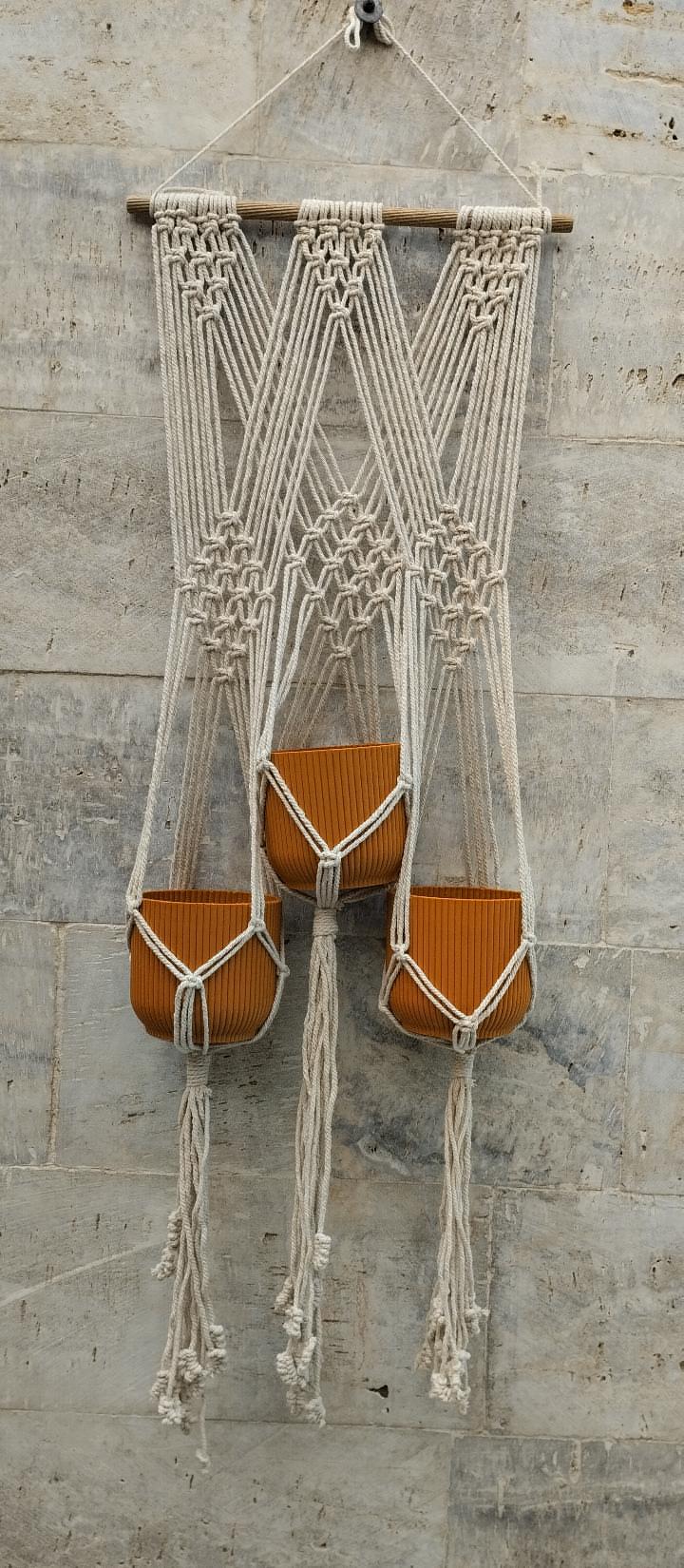
Crochet work by Hanadi al-Homsi

Although the income generated by such activities is unstable and lacks any form of legal protection, many women still prefer it to working outside the home, especially given Syria’s ongoing security concerns.

This is the case for Hanadi al-Homsi, who lives in the town of Sahnaya in rural Damascus and owns the crochet business “Makramiti.”

Initially, al-Homsi’s project was more of a hobby, a way to fill her free time, but it has since transformed into a source of income that supports her household. She started from scratch, using raw materials and yarn readily available at home. She then developed her skills online and tried to market her work through social media.

She faced dismissive attitudes from some people who argued that what she was doing was a waste of time and unnecessary. “Working from home provides a safe and comfortable environment,” she asserts, “and you control your own time. You decide how to divide it among responsibilities for the business and the family.”

Although the income generated by such activities is unstable and lacks any form of legal protection, many women still prefer it to working outside the home, especially given Syria’s ongoing security concerns.

Fragile empowerment: Income without protection or stability

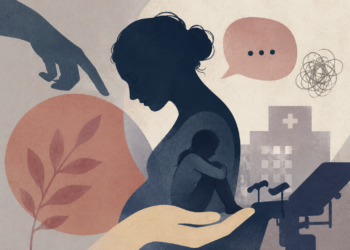
This reality places women in a precarious position, especially given market fluctuations. The lack of formal recognition makes it difficult for these projects to survive or grow, leaving their future uncertain. This raises an important question about the nature of such activities: do they challenge traditional gender roles, or simply reproduce them in a new form?

In many cases, these enterprises never truly move beyond the boundaries of the home; they may reinforce women’s presence within it, even if in a more productive capacity. Despite the flexibility offered by working from home, in the living room, it remains tied to the idea that the home is the “natural” sphere for women’s work. Here a contradiction emerges: women work, produce, and generate income, yet this labor is added to the unpaid caregiving and domestic responsibilities they already shoulder every day.

Still, these experiences cannot be reduced to a mere reproduction of traditional roles. There is a real shift, however limited. Many women are experiencing for the first time what it means to have their own income or the ability to make decisions without being dependent on an employer or family. This space may be narrow, but it remains significant because it fosters self-confidence and opens the possibility of imagining different futures.

In this sense, it can be said that the home-based economy is still a largely ambiguous space. It doesn’t grant women full liberation, but it does shift the previously existing dynamic of dependency.

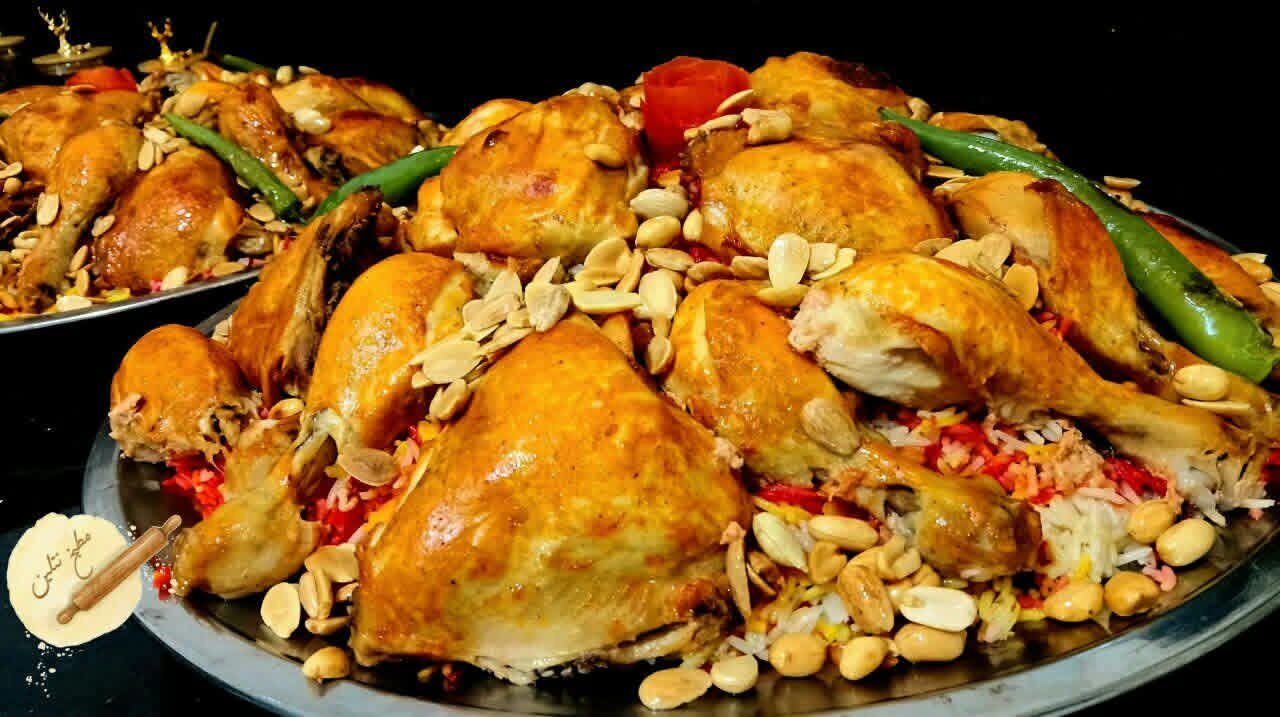
Nataline, the owner of Nataline Restaurant in western rural Homs, shared a similar story. She worked in the food sector for years, but her business hadn’t grown and barely covered the costs of food and drink. Eventually, with the support of a friend of her daughter’s, an expatriate living in Germany, the project received financial backing and was transformed into a fully integrated business that could serve as a reliable source of income for the entire family—something that had previously seemed impossible. The costs of equipment, permits, commercial registration, and other start-up requirements demanded capital far beyond what a small home-based business could provide.

“Maybe I got lucky,” she says, “but there are many other women who still need support for their projects.”

A dish from Nataline’s restaurant

Toward a more equitable economy for women

This type of economic activity has helped many families meet their basic needs, particularly those that have lost their primary breadwinner. It has also provided women with a measure of economic security and, in some cases, protection from various forms of violence that can arise from a lack of financial independence.

According to the Syrian Network for Human Rights, at least 177,057 people have been forcibly disappeared over the course of 15 years of conflict, the majority of them men.

Despite the relative economic stabilization that has begun to emerge following the fall of the Assad regime on December 8, 2024, and the subsequent lifting of European and US sanctions on Syria, women continue to occupy the most vulnerable position in this complex and fragile transitional period.

Speaking to Medfeminiswiya, activist Rima Sawah explains, “In one way or another, this type of economic activity contributes to the broader economy and to the country’s economic life. But what we truly fear is the current unplanned economic liberalization, which directly impacts local products and, in turn, the micro-enterprises run by women—whether in crochet, candle-making, or even confectionery production. Yet despite their modest scale, these projects can often generate a decent income, particularly when women receive training in marketing and market-related skills. This is something we incorporate into every program we organize for women. At the end of each workshop or training session, we hold awareness-raising discussions on economic empowerment and how it can be used as a tool to prevent gender-based violence.”

Sawah adds that while such projects offer many benefits, they also come with significant challenges. The absence of legal frameworks to protect these businesses leaves some women vulnerable to fraud, particularly when transactions take place online. They may also be exposed to various forms of electronic violations. Therefore, it is important to intensify awareness campaigns to protect women from violations, safeguard their financial rights, and advocate for effective legislation that can genuinely support and sustain these projects.

Luna Al-Rashed

Luna Al-Rashed

Luna Al-Rashed is a Syrian journalist and writer, studying at the Higher Institute of Cinema in Damascus. She is interested in women’s empowerment and gender justice in media and cinematic storytelling.

Leave a Reply Cancel reply

Your email address will not be published. Required fields are marked *

J'accepte les termes et conditions et la Politique de confidentialité .

Related articles

Related posts

Gaza’s wounded women held hostage by Israeli decision on permission to receive treatment abroad
On the move

Gaza’s wounded women held hostage by Israeli decision on permission to receive treatment abroad

by Doaa Shaheen
18 May 2026

Related posts

Egypt: A systematic pattern of grooming young women in human rights and cultural circles
On the move

Egypt: A systematic pattern of grooming young women in human rights and cultural circles

by Roukia Fared
18 May 2026

JOIN OUR NEWSLETTER

Original content. Feminist journalism. Straight to your inbox.

    Related posts

    On the move

    Khul’ is the corollary of repudiation

    by Ghania Khelifi
    7 April 2021

    Related posts

    On the move

    The post-Covid era is in the hands of women: feminist proposals for a green revolution

    by Monica Lanfranco
    5 January 2021

    Popular articles

    Thirty and single… so what?
    On the move

    Thirty and single… so what?

    by Pascale Sawma
    1 March 2022
    Israel to Palestinian journalists: Be silent… or else!
    In-depth

    Israel to Palestinian journalists: Be silent… or else!

    by Alaa Murrar
    29 November 2023
    Giving birth with an open womb or when Caesarean section becomes the norm in Egypt
    Abortion and SRHR

    Giving birth with an open womb or when Caesarean section becomes the norm in Egypt

    by Contributor with Medfeminiswiya
    27 September 2021
    On the move
    In-depth
    Files
    Artistic Creations
    Interviews
    Opinions
    World
    On the move
    In-depth
    Files
    Artistic Creations
    Interviews
    Opinions
    World

    Medfeminiswiya is a feminist network that brings together women journalists working in the fields of media and content production in the Mediterranean region.

    • About us
    • Country Context
    • Our community
    • Become a member
    • Our partners
    • Editorial charter
    • Disclaimer

    Follow us :

    JOIN OUR NEWSLETTER

    Original content. Feminist journalism. Straight to your inbox.

      © 2026 Medfeminiswiya – Mediterranean Network for Feminist Information

      Back to top

      Welcome Back!

      Login to your account below

      Forgotten Password?

      Retrieve your password

      Please enter your username or email address to reset your password.

      Log In

      Add New Playlist

      No Result
      View All Result
      • On the move
      • In-depth
      • Files
      • Artistic Creations
      • Interviews
      • Opinions
      • World
      • it VO
      • fr Français
      • en English
      • ar العربية

      © 2026 Medfeminiswiya - Mediterranean Network for Feminist Information

      Ce site n'utilise pas de cookies. This website does not use cookies. هذا الموقع لا يستخدم ملفات تعريف الارتباط.