Cette publication est également disponible en :
In the heart of the coastal city of Alexandria, the most affected by climate change in Egypt given the rising sea levels, increasing water salinity, and the formation of unusual weather phenomena, 28-year-old engineer Sarah Ragab is aware of the need for unconventional solutions to protect infrastructure. Seeing how the harsh climate is eroding streets, Ragab got motivated to research sustainable alternatives to asphalt, and this led her to an innovation for which she received an official patent from the Ministry of Higher Education and Scientific Research in June 2024: she developed a method to convert plastic material into material that can be used to pave roads.
Waste and environmentally harmful material
Ragab’s innovation wasn’t a spur-of-the-moment thing. She first got the idea in 2022 when she participated in the COP27 climate conference in Sharm el-Sheikh. It was there that she realized that the plastic we use in our daily lives could be an unexploited resource, one that could be usefully recycled instead of wasted, and so she decided to offer her unique contribution in the field. She collected tons of plastic waste and metal containers and reshaped them with her own hands into two three-dimensional sculptures: a globe representing the fragility of our planet and a camel symbolizing Sharm el-Sheikh, the city of peace. Ragab used more than 4,000 containers to create these, and she chose dark and light shades of green to get the message of sustainability across. “What I was trying to communicate back then was that we can save this planet from pollution, one scrap at a time, one idea at a time,” she tells Medfeminiswiya.
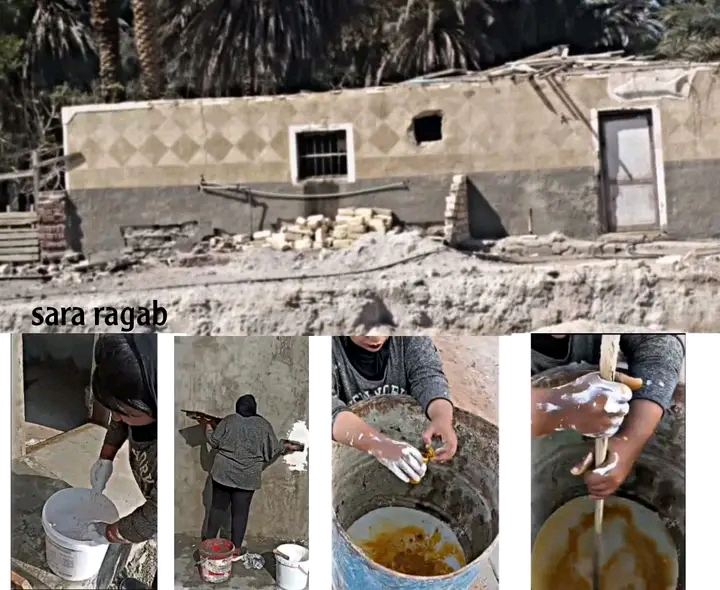
Ragab was struck by the cracks in Alexandria’s sidewalks, and she decided to look for solutions to repair the damaged areas with economical material—instead of redoing the entire pavement, which would cost the state huge sums to import bitumen. Bitumen is a viscous hydrocarbon extracted from refined crude oil, and it is known for its essential role in binding asphalt and making it water- and weather-resistant (1).
It is noteworthy that Egypt spent approximately one billion Egyptian pounds, the equivalent of $19.8 million, on paving roads with interlocking pavers instead of asphalt, as per the 2024/25 budget.
How is the alternative manufactured?
Ragab began conducting extensive research into the use of plastic in the production of asphalt alternatives after noticing the significant bitumen shortages; she had to search for local, environmentally friendly alternatives that promote sustainability and reduce reliance on imported materials.
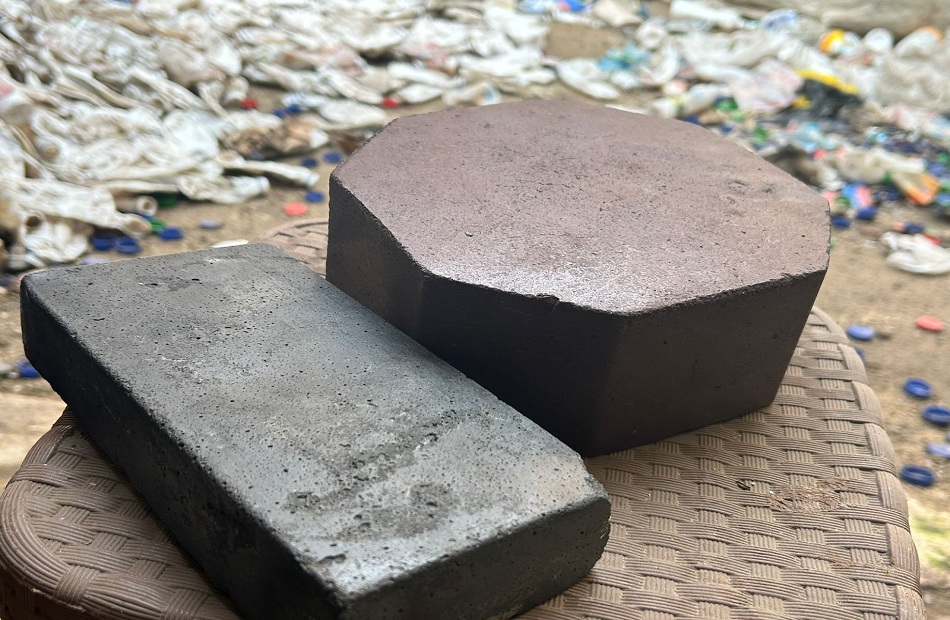
She has developed an integrated process to produce an asphalt alternative by recycling plastic waste. First, used plastic is collected from various sources, then it is sorted and cleaned to ensure the purity of the raw material. The plastic is then crushed and mixed with other material to enhance its physical and chemical properties, making it more durable and long-lasting than conventional asphalt. All steps of the process are carried out according to strict scientific standards to ensure the quality of the final product.
More efficient than conventional asphalt
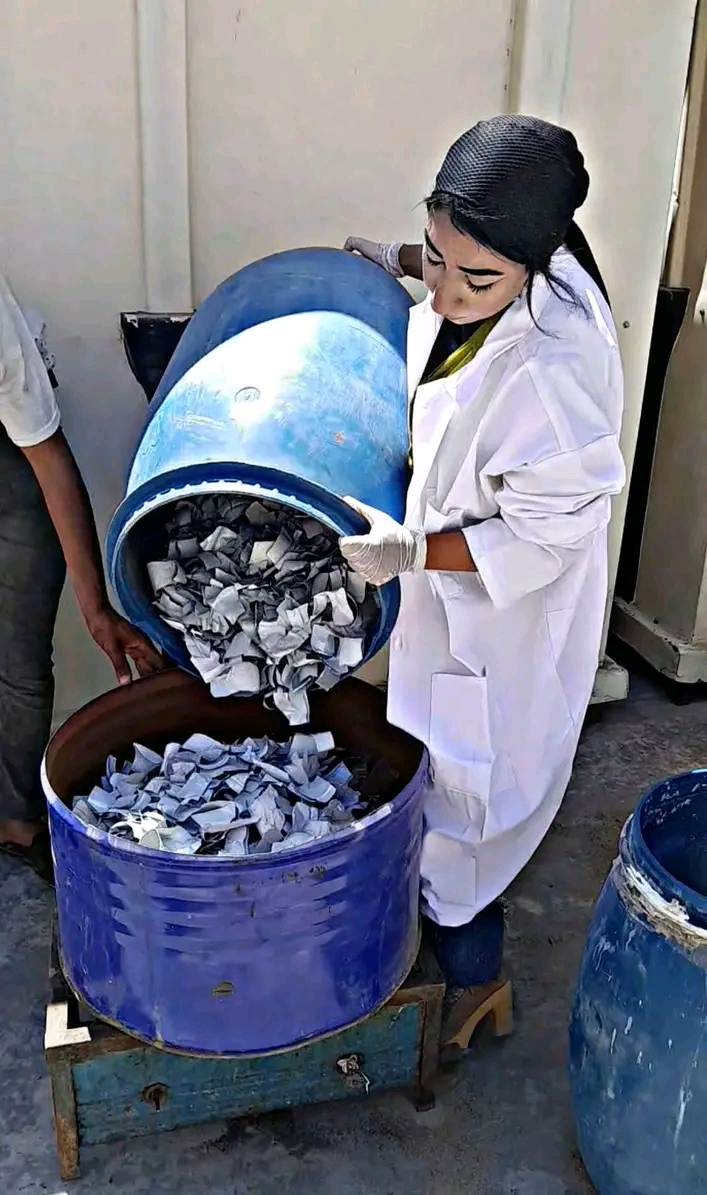
Engineering tests at the General Authority for Educational Buildings have proven that Ragab’s material outperforms conventional asphalt in durability and water resistance thanks to its non-porous composition. This makes it more resilient to harsh weather conditions which impact conventional asphalt, such as heavy rain and strong winds.
Her innovation is a quick and effective maintenance solution, as the material can be used to repair cracks and breaks in main roads without having to repair the entire road—this saves time and money and reduces the waste of resources. It can also be easily applied to side and narrow streets, which are most affected by heavy rains or severe drought. “My innovation would allow Egypt to save between 60 and 70% of the total cost of importing bitumen,” Ragab says.
She received the support of Major General Mohamed Sherif, the former governor of Alexandria, who helped her obtain the necessary plastic waste and allowed her to use the company’s machinery, responsible for cleaning the city, to assist in sorting, crushing, and manufacturing operations. “I tested the alternative to conventional asphalt on the streets of Alexandria with the governor present, and we are now preparing to use it more widely,” she adds.
More than just asphalt
Ragab’s idea expanded to include the production of interlocking pavers, used to pave sidewalks and narrow streets. By recycling plastic, she managed to offer an economical alternative that reduces import costs and contributes to building sustainable infrastructure with less environmental impact. This is key given the increasing impacts of climate change on Egyptian cities. Ragab explains, “I tried to provide a practical solution to transform waste into a valuable resource that would contribute to improving the quality of life and developing the infrastructure sector in Egypt.”
“I want to change the way society perceives waste. I want to prove that recycling is not just an environmental solution but an opportunity for creativity and a more sustainable future,”
Ragab, who holds a BA in heritage building preservation from Alexandria University, began her journey in environmental protection and addressing the damage caused by climate change five years ago. She used to paint her city eroded by time and climate in an effort not only to convey an artistic message but as a form of silent resistance against climate change, which threatens the city’s infrastructure, to emphasize the importance of environmental conservation in her own unique way.
Ragab also painted murals in Alexandria that earned her the nickname “The Queen of Graffiti,” transforming neglected walls into vibrant artworks at her own expense.
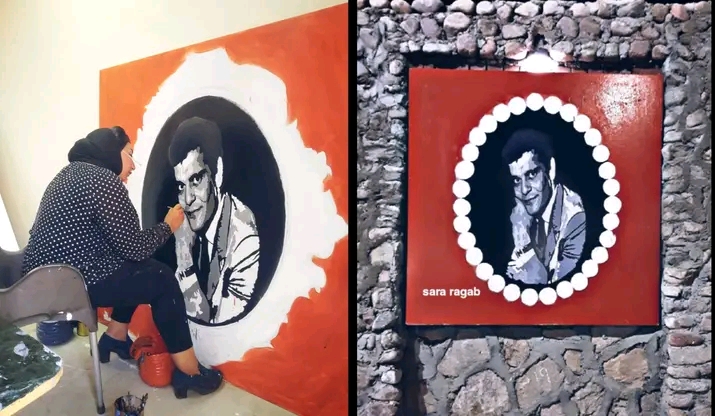
But her goal was not only to draw: her aim was to spread awareness on the importance of a culture of environmental conservation. The city in which she was born, whose sea air she breathes, deserves to have its walls reflect its true identity and not remain neglected spaces buried under dust and the ravages of time.
“I want to change the way society perceives waste. I want to prove that recycling is not just an environmental solution but an opportunity for creativity and a more sustainable future,” Ragab concludes.