• it VO
  • fr Français
  • en English
  • ar العربية
About us
  • In-depth
    • All
    • Features
    • Files
    • World
    Morocco: 600 abortions a day—Alarming figures and tragic stories

    Morocco: 600 abortions a day—Alarming figures and tragic stories

    In Spain, the right to abortion is not guaranteed for all

    In Spain, the right to abortion is not guaranteed for all

    Invisible and vulnerable: Migrant women at the frontlines of Spain’s prostitution debate

    Invisible and vulnerable: Migrant women at the frontlines of Spain’s prostitution debate

    Serbia: Is contraception a luxury or a basic human right?

    Serbia: Is contraception a luxury or a basic human right?

    Rebels, witnesses, victims: Women against the mafia (3/3)

    Rebels, witnesses, victims: Women against the mafia (3/3)

    Trending Tags

    • Women artists
    • Ecofeminism
    • Women living from and on the streets
    • Women and bodies
    • Women and sports
    • Women and cinema
    • Ramadan series
    • Women and war
    • Women Living at the Margins
    • Press Freedom from the Perspective of Women Journalists
    • Period poverty
    • Gynecological violence
    • Women and prison
    • Safe spaces
    • Abortion and SRHR
    • Transgenderism
    • Women in rural areas
  • On the move
    Spain: CEAR and the fight against human trafficking

    Spain: CEAR and the fight against human trafficking

    Gaza: How many journalists must be killed for the world to react?

    Gaza: How many journalists must be killed for the world to react?

    Moroccan activist Ibtissam Lachgar held in solitary confinement, health in crisis

    Moroccan activist Ibtissam Lachgar held in solitary confinement, health in crisis

    Three women for one man’s pay: The plight of female agricultural workers in Egypt

    Three women for one man’s pay: The plight of female agricultural workers in Egypt

  • Portraits
    Sophie Bessis: “The battle for the intimate will be long, especially in the Global South!”

    Sophie Bessis: “The battle for the intimate will be long, especially in the Global South!”

    “Mom, Dad, Can We Talk About Privacy?”—A Tunisian children’s book on protecting kids from sexual violence

    “Mom, Dad, Can We Talk About Privacy?”—A Tunisian children’s book on protecting kids from sexual violence

    Kurdish journalist killed in Turkish drone strike in northeastern Syria

    Kurdish journalist killed in Turkish drone strike in northeastern Syria

    A Filmmaker’s Journey: Inside the Creative World of Margarita Bareikyte

    A Filmmaker’s Journey: Inside the Creative World of Margarita Bareikyte

  • Creations
    • All
    • Reviews
    • Visual Arts
    “La Malédiction (1)”, a theatrical adaptation of King Kong Theory bursting with Tunisian rage

    “La Malédiction (1)”, a theatrical adaptation of King Kong Theory bursting with Tunisian rage

    “Mom, Dad, Can We Talk About Privacy?”—A Tunisian children’s book on protecting kids from sexual violence

    “Mom, Dad, Can We Talk About Privacy?”—A Tunisian children’s book on protecting kids from sexual violence

    The El’Sardines series, a delicate feminist manifesto centered around an ecological mystery

    The El’Sardines series, a delicate feminist manifesto centered around an ecological mystery

    Atlantics, a film by Mati Diop: Filming the embodied resistance of spirits

    Atlantics, a film by Mati Diop: Filming the embodied resistance of spirits

  • Opinion
    Women in Gaza are living their worst nightmares - “ I want to go back to my life before the war, to my privacy, my home ”

    Women in Gaza are living their worst nightmares - “ I want to go back to my life before the war, to my privacy, my home ”

    Messages from life under bombardment—Can a mother cope with losing her six children at once? (10)

    Messages from life under bombardment—Can a mother cope with losing her six children at once? (10)

    Messages from life under bombardment—No cake for my children on their birthdays (9)

    Messages from life under bombardment—No cake for my children on their birthdays (9)

    Messages from life under bombardment – No food or water in Gaza (8)

    Messages from life under bombardment – No food or water in Gaza (8)

  • Multimedia
    "I hope it doesn’t go viral: Journalism and sexist attacks in digital age". A video investigation by Çiçek Tahaoğlu

    "I hope it doesn’t go viral: Journalism and sexist attacks in digital age". A video investigation by Çiçek Tahaoğlu

    Period poverty in Montenegro

    Period poverty in Montenegro

    Period poverty in France (1)

    Period poverty in France (1)

    Period Poverty in Italy

    Period Poverty in Italy

  • Country context
No Result
View All Result
BLOGS
Medfeminiswiya
  • In-depth
    • All
    • Features
    • Files
    • World
    Morocco: 600 abortions a day—Alarming figures and tragic stories

    Morocco: 600 abortions a day—Alarming figures and tragic stories

    In Spain, the right to abortion is not guaranteed for all

    In Spain, the right to abortion is not guaranteed for all

    Invisible and vulnerable: Migrant women at the frontlines of Spain’s prostitution debate

    Invisible and vulnerable: Migrant women at the frontlines of Spain’s prostitution debate

    Serbia: Is contraception a luxury or a basic human right?

    Serbia: Is contraception a luxury or a basic human right?

    Rebels, witnesses, victims: Women against the mafia (3/3)

    Rebels, witnesses, victims: Women against the mafia (3/3)

    Trending Tags

    • Women artists
    • Ecofeminism
    • Women living from and on the streets
    • Women and bodies
    • Women and sports
    • Women and cinema
    • Ramadan series
    • Women and war
    • Women Living at the Margins
    • Press Freedom from the Perspective of Women Journalists
    • Period poverty
    • Gynecological violence
    • Women and prison
    • Safe spaces
    • Abortion and SRHR
    • Transgenderism
    • Women in rural areas
  • On the move
    Spain: CEAR and the fight against human trafficking

    Spain: CEAR and the fight against human trafficking

    Gaza: How many journalists must be killed for the world to react?

    Gaza: How many journalists must be killed for the world to react?

    Moroccan activist Ibtissam Lachgar held in solitary confinement, health in crisis

    Moroccan activist Ibtissam Lachgar held in solitary confinement, health in crisis

    Three women for one man’s pay: The plight of female agricultural workers in Egypt

    Three women for one man’s pay: The plight of female agricultural workers in Egypt

  • Portraits
    Sophie Bessis: “The battle for the intimate will be long, especially in the Global South!”

    Sophie Bessis: “The battle for the intimate will be long, especially in the Global South!”

    “Mom, Dad, Can We Talk About Privacy?”—A Tunisian children’s book on protecting kids from sexual violence

    “Mom, Dad, Can We Talk About Privacy?”—A Tunisian children’s book on protecting kids from sexual violence

    Kurdish journalist killed in Turkish drone strike in northeastern Syria

    Kurdish journalist killed in Turkish drone strike in northeastern Syria

    A Filmmaker’s Journey: Inside the Creative World of Margarita Bareikyte

    A Filmmaker’s Journey: Inside the Creative World of Margarita Bareikyte

  • Creations
    • All
    • Reviews
    • Visual Arts
    “La Malédiction (1)”, a theatrical adaptation of King Kong Theory bursting with Tunisian rage

    “La Malédiction (1)”, a theatrical adaptation of King Kong Theory bursting with Tunisian rage

    “Mom, Dad, Can We Talk About Privacy?”—A Tunisian children’s book on protecting kids from sexual violence

    “Mom, Dad, Can We Talk About Privacy?”—A Tunisian children’s book on protecting kids from sexual violence

    The El’Sardines series, a delicate feminist manifesto centered around an ecological mystery

    The El’Sardines series, a delicate feminist manifesto centered around an ecological mystery

    Atlantics, a film by Mati Diop: Filming the embodied resistance of spirits

    Atlantics, a film by Mati Diop: Filming the embodied resistance of spirits

  • Opinion
    Women in Gaza are living their worst nightmares - “ I want to go back to my life before the war, to my privacy, my home ”

    Women in Gaza are living their worst nightmares - “ I want to go back to my life before the war, to my privacy, my home ”

    Messages from life under bombardment—Can a mother cope with losing her six children at once? (10)

    Messages from life under bombardment—Can a mother cope with losing her six children at once? (10)

    Messages from life under bombardment—No cake for my children on their birthdays (9)

    Messages from life under bombardment—No cake for my children on their birthdays (9)

    Messages from life under bombardment – No food or water in Gaza (8)

    Messages from life under bombardment – No food or water in Gaza (8)

  • Multimedia
    "I hope it doesn’t go viral: Journalism and sexist attacks in digital age". A video investigation by Çiçek Tahaoğlu

    "I hope it doesn’t go viral: Journalism and sexist attacks in digital age". A video investigation by Çiçek Tahaoğlu

    Period poverty in Montenegro

    Period poverty in Montenegro

    Period poverty in France (1)

    Period poverty in France (1)

    Period Poverty in Italy

    Period Poverty in Italy

  • Country context
About us
Medfeminiswiya
About us

Behind the scenes: Violence, persecution, and gender bias facing female film workers in Morocco

A recent study(1) in Morocco has revealed a widespread prevalence of various forms of gender-based violence in the film industry. This study is the first of its kind in Morocco and falls within efforts to promote best practices to combat discriminatory gender stereotypes. It’s an extension of the country’s MeToo movement (#Masaktach), which was launched in 2018 to expose the violence and rape culture that Moroccan women are subjected to.

Salma Chatt by Salma Chatt
27 February 2025
in In-depth
19 1
0
Share on FacebookShare on Twitter

This post is also available in: Français (French) العربية (Arabic)

Few Moroccan actresses have spoken publicly about the violence and harassment they face in the arts field, for fear of retaliation or forced exclusion from work. But the actress Najat Khair Allah daringly named the men who harassed her on the Charisma show, which aired two years ago.

Khair Allah said that someone kidnapped her, someone else wanted her to go to his home, and yet another person had a bed in his private office and bargained with actresses for leading roles. She had previously filed a complaint against the actor Tarik Boukhari, accusing him of sexually harassing her several times while filming the series Al-Khawa in 2015.

In a symposium organized by the Moroccan Association for Victims’ Rights in 2021, Khair Allah spoke out about the details of the violence she’d been subjected to at the hands of Boukhari. “I was in the dressing room with the wardrobe coordinator when Tarik suddenly came in and grabbed me. He threw me on the bed and flung himself on top of me. But I know the wardrobe coordinator would never testify against him. She’s also a woman—if she testifies in my favor, she’d never dream of getting another job.”
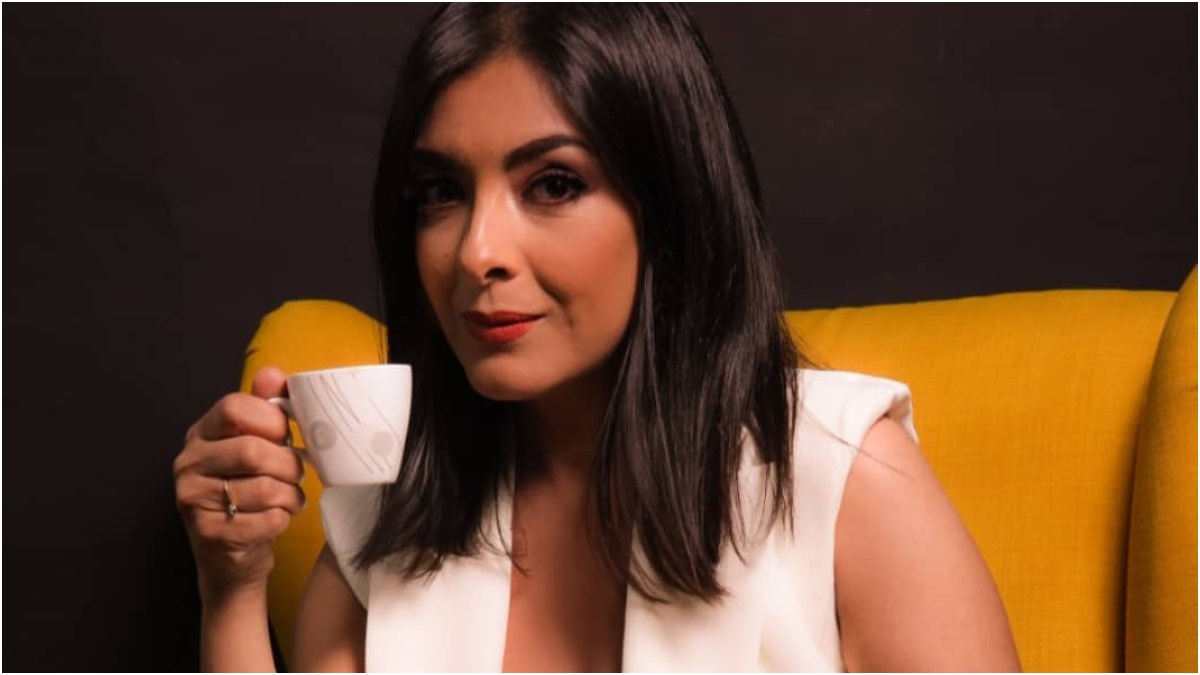
Najat Khairallah

Khair Allah put herself in the line of fire with these statements, and she was attacked fiercely on social media as a result. Some people even questioned her accusations, mocked her story, and made her out to be mentally ill.

Women working in the Moroccan film industry continue to face various forms of gender-based violence behind the scenes, to the point that they’ve come to consider it an imposed reality in an environment that is dominated by men with an iron fist.

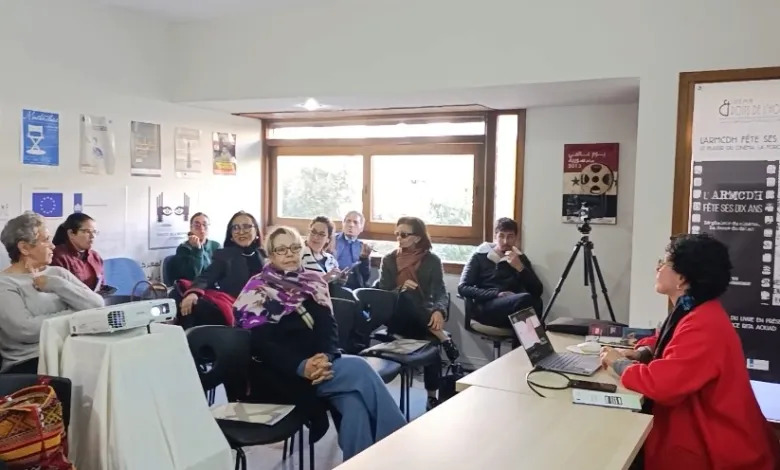
In this context, the Association of Mediterranean Meetings of Cinema and Human Rights (ARMCDH) in Rabat issued a study last January entitled “Gender-Based Violence in the Moroccan Film Industry,” as part of its efforts to advocate for public policy that promotes human rights in the field of cinema—especially women’s rights, to protect them from all forms of discrimination and violence.

This study is the first of its kind in the field of cinema, and it has revealed shocking facts and figures, most notably as relates to women being subjected to multiple forms of sexual, psychological, and economic violence. These violations are rarely publicly acknowledged or addressed.

The study also found that the economic violence that women are exposed to in this field has to do with the ambiguity of the nature of the tasks assigned to them and the signing of unfair contracts that serve the interests of production companies. The vulnerability of female workers in the technical and production fields is always exploited. As for sexual violence, it is the most common among actresses, especially those who are younger: they are exposed to sexual blackmail, unwanted comments, and inappropriate touching.

80% of female film workers have been subjected to violence

The survey has shown that 80% of participants had experienced violence or witnessed at least one instance of gender-based violence in the film industry. These women pointed out that psychological violence is the most widespread, followed by economic and then sexual violence. The results also show that violence against women in this sector exists at all levels. This violence is two-dimensional: horizontal, among members of the same team or across teams, and vertical, practiced by superiors on subordinates.

“Only through the true will of all participants will the status quo begin to change towards a more just and safer environment for women in the film industry.”
In this context, ARMCDH head Fadoua Maroub says, “The film industry in Morocco fosters randomness and chaos. And this contributes to the spread of unacceptable practices on film sets, such as increasing working hours without informing employees, frequent postponements, working in unknown locations, and randomness in managing work and making decisions. All of this occurs under other circumstances that make women more tense and that increase the risk of sexual harassment and gender-based violence.”

The association’s president also tells Medfeminiswiya that psychological and sexual violence are more prevalent among women who are just starting out their careers or who are experiencing difficult economic conditions. “Unfortunately, victims tend to remain silent and are unable to denounce these practices,” she explains. “This is due to a lack of awareness, of knowledge of their full rights. They also suffer from having to normalize these practices in a fragile work environment if they want to continue their careers without problems.”

Fear of retaliation and professional exclusion

The study points to the pervasiveness of a culture of submission and compliance for fear of being stigmatized. This leads to tolerance of all forms of violence in the film industry, especially gender-based violence, under pretexts invented by abusers, such as workload pressure, the multidisciplinary nature of film, and the challenges of the profession.

The survey has shown that 80% of participants had experienced violence or witnessed at least one instance of gender-based violence in the film industry.

Often, violence is underestimated and even justified with flimsy arguments such as negligence at work or a lack of required vigilance and accuracy—all intangible justifications that are difficult to refute. The study also indicates that there are other obstacles to reporting violence, such as weak solidarity among colleagues, fear of retaliation from abusers, and the dominance of men in the sector—men who either commit these violations or deal with them with indifference.

Maroub adds, “We faced several difficulties in completing this study. There was a lack of reliable data and sources on working conditions in the film industry. Some female workers were reluctant to participate in interviews, and others refused to provide their testimonies despite our guarantees of complete confidentiality, for fear of retaliation or professional exclusion.”

After the publication of the study, there were high hopes that other voices would emerge to expose or denounce this legally and morally unacceptable reality. But this did not happen. The ARMCDH president expresses her regret, saying, “Women must take the initiative to confront the violence they are subjected to. They must organize themselves in order to achieve the change we all seek.” 

A predominantly masculine field

The study finds that women’s failure to access decision-making positions, their weak representation in professional environments and Moroccan women’s film sector unions, and their limited role in advocacy and collective condemnation of gender-based violence in the field all lead to the perpetuation of gender discrimination. There are 12 professional associations in the film sector in Morocco, with 100 managing members, only 10 of whom are women, and more than 50% of administrative offices completely lack female representation.

In a previous study on “Gender Equality in the Moroccan Film Industry,” conducted by the Democratic Association of Moroccan Women (ADFM) in 2020, it was noted that women’s work is more concentrated in professions that are traditionally considered “feminine,” with retail at 47%, hairdressing at 65%, and makeup at 19%. As for the film industry, women only make up 20% of workers in the production field, 28% in directing, and only 3.6% in technical professions such as photography, sound, and lighting.

Regarding the role of institutions in protecting women from violence in the film industry, the female researchers say that the Moroccan Centre for Cinematography (for female technical workers) and the Ministry of Culture (for female actors) take complaints of gender-based violence seriously, but they can only offer mediation, and the slow pace of court procedures is a major obstacle to reporting cases of violence.

What’s the solution?

In the absence of mechanisms to protect women from gender-based violence and given the lack of clarity in litigation procedures, the study recommended in its conclusion the need to reform the legal arsenal so as to establish professional rules to combat all forms of discrimination and violence and ensure respect for the working conditions of female professionals in the film industry, in accordance with the Labor Law and the specifications concluded with the relevant authorities.

The study also suggested that the Moroccan Centre for Cinematography and the Ministry of Culture prepare a model employment contract that would protect female professionals in the sector from all forms of gender-based violence by clearly defining tasks, including articles on good conduct, and prohibiting discriminatory practices.

It called for organizing awareness campaigns to support women working in the field and launching training modules on women’s rights, which would include prevention and protection from all types of gender-based violence and would be offered in schools and institutes that provide training for future professionals in the film industry.

The Association of Mediterranean Meetings of Cinema and Human Rights (ARMCDH) presented these conclusions to various civil society associations, particularly feminist ones, with the aim of investing in them to protect and guide women victims of violence in the professional field through listening services or legal guidance.

ARMCDH is also keen to share the results of the study with the relevant bodies for action to be taken and for the appropriate decisions to be made. The association’s president Maroub says, “We sent the report to the Ministry’s Culture Department and the Moroccan Centre for Cinematography to follow up on the various recommendations issued by the study and interact with them in a way that serves the interests of women working in the field. We are working on launching a communication and awareness campaign and will make sure to involve professionals in the sector, business chambers, the Centre for Cinematography, and the cultural sector so we can think together and develop solutions to limit the prevalence of violence against women in all its forms in the industry. Only through the true will of all participants will the status quo begin to change towards a more just and safer environment for women in the film industry.”
  1. Les violences basées sur le genre dans le secteur du cinéma au Maroc.
Salma Chatt

Salma Chatt

Moroccan journalist, winner of national and international awards, and a graduate of the Higher Institute of Information and Communication in Rabat. She is interested in women's rights, freedoms, migration issues, and the environment.

Related posts

“Palestinian Women,” the revived history of women militants for the liberation of Palestine
In-depth

“Palestinian Women,” the revived history of women militants for the liberation of Palestine

by Nathalie Galesne
6 February 2024
844

The documentary by Lebanese director Jocelyne Saab, screened at the 27/20 Festival in Tunis, shook the public. What do these...

Croatia: Men Kneeling in Main Squares for Women’s Chastity
In-depth

Croatia: Men Kneeling in Main Squares for Women’s Chastity

by Snježana Pavić
25 September 2023
765

On the first Saturday of every month, groups of men kneel in the main squares of many cities across Croatia...

Single moms in Lebanon: We fight alone

Single moms in Lebanon: We fight alone

8 June 2021
651
Tunisia: 10 years after 14 January 2011, women are still in Revolution

Tunisia: 10 years after 14 January 2011, women are still in Revolution

10 May 2021
562

Leave a Reply Cancel reply

Your email address will not be published. Required fields are marked *

J'accepte les termes et conditions et la Politique de confidentialité .

Medfeminiswiya

Medfeminiswiya is a feminist network that brings together women journalists working in the fields of media and content production in the Mediterranean region.

Newsletter


    Follow us

    Browse topics


    • In-depth
    • Files
    • Features
    • On the move
    • Portraits
    • Opinion

    • Creations
    • Visual Arts
    • Reviews
    • Multimedia
    • Country Context
    • Blogs
    • About us
    • Our community
    • Our partners
    • Become a member
    • Editorial charter
    • Disclaimer

    © 2025 Medfeminiswiya - Mediterranean Network for Feminist Information

    • it VO
    • fr Français
    • en English
    • ar العربية
    • In-depth
    • On the move
    • Portraits
    • Creations
    • Opinion
    • Multimedia
    • Country context
    • Blogs
    No Result
    View All Result

    © 2025 Medfeminiswiya - Mediterranean Network for Feminist Information

    Welcome Back!

    Login to your account below

    Forgotten Password?

    Retrieve your password

    Please enter your username or email address to reset your password.

    Log In

    Add New Playlist

    Ce site n'utilise pas de cookies. This website does not use cookies. هذا الموقع لا يستخدم ملفات تعريف الارتباط.